See the frame
Mentalism, Correspondence and Vibration as instruments to separate fact from frame, read the surfaces of your own life, and notice the mobility of your inner states before they govern your week.
 Alexandros Theon
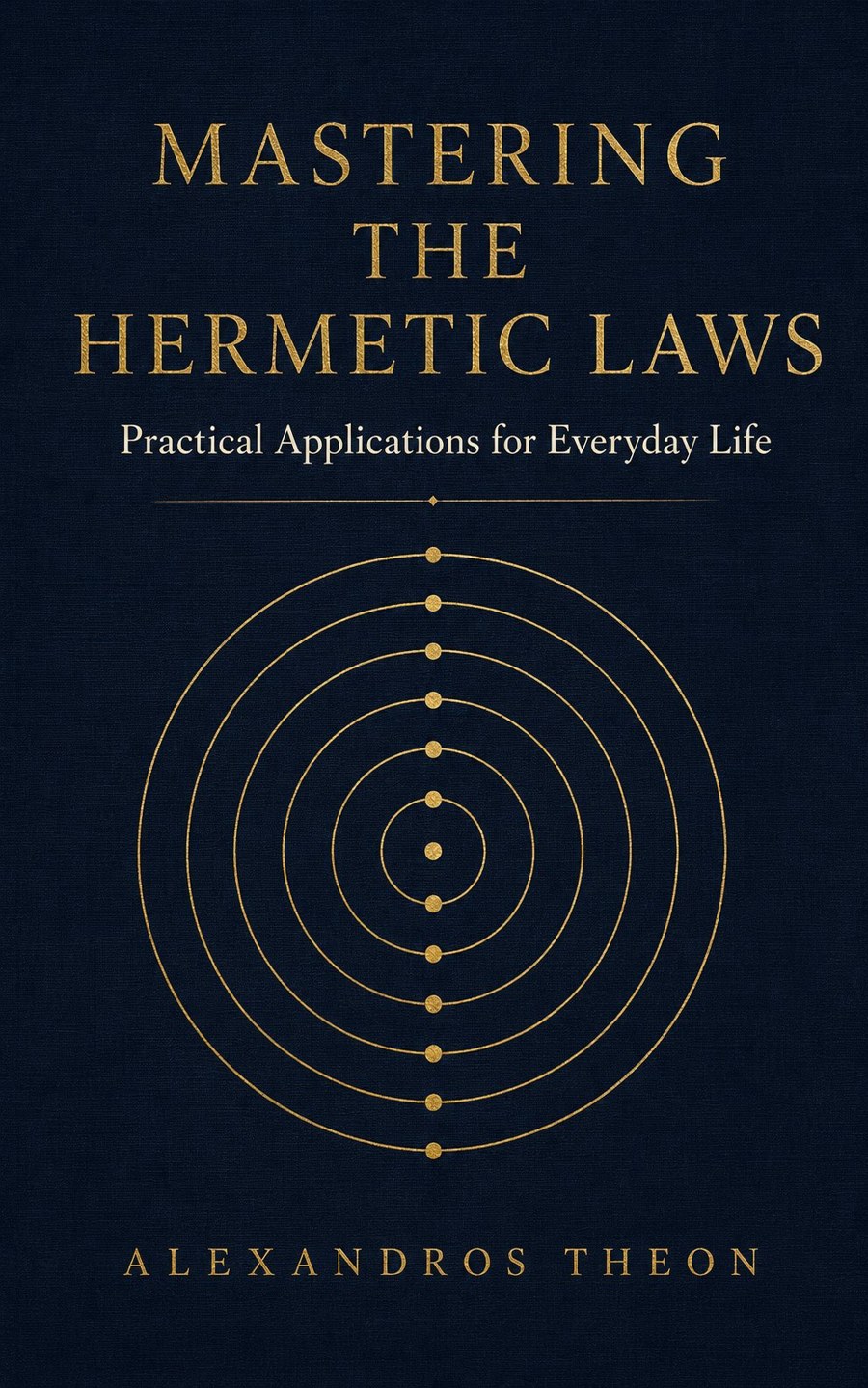
Alexandros Theon · Hermetic Laws
Practical Applications for Everyday Life
Seven ancient principles turned into a discipline of attention. No rituals for wealth, no bending the universe to your wishes. A notebook, a few minutes a day, and seven named practices that build on one another across one ordinary season.
The problem
Sunday, 9:40 p.m. Daniel feels the familiar weight settle in: the same dread before the same week, the same two-line emails from his director read as the same verdict. He has read the books. He understands himself, in theory. And yet the evening is heavy again, and he has begun to suspect that the one element common to every situation that frustrates him is the one he never examines: himself.
Insight is cheap and everywhere. What is rare is the patience to point a principle at your own life, gently, on schedule, for longer than enthusiasm lasts. Most self-knowledge stays on the page because nothing turns it into a habit of attention.
"Ideas about perception change nothing. Perception changes things, and perception is trained, not decided."
From the final chapterWhat this book teaches
The Hermetic laws are presented as practical philosophy, never as science and never as a technology of wishes. Where there is analogy, it is declared as analogy. The book makes its commitments in the opening note: it will not make you rich, cure an illness, or replace treatment. What it offers is quieter and more durable, a trained eye for the patterns you have already lived a hundred times without seeing.
Mentalism, Correspondence and Vibration as instruments to separate fact from frame, read the surfaces of your own life, and notice the mobility of your inner states before they govern your week.
Polarity, Rhythm, Cause and Effect and Gender applied to the pendulum of mood and energy, the seasons of your output, your recurring contribution to conflict, and the two modes every task is starving for.
Seven named practices that build in sequence, a chapter applying them to work and vocation, and a twenty-one-day plan that lets the laws settle from ideas into attention. Read at once, a reasonable book; practiced week by week, another book entirely.
Inside the book
Who this book is for
Who should not read it

About the author
Alexandros Theon is a literary pseudonym. The choice moves the center of gravity away from a personality and toward the library: a line of books created to study, organize and apply ancient principles with contemporary responsibility. The path is that of practical philosophy, with respect for every sincere form of seeking.
In the works of Alexandros Theon there are no promises of cure, guaranteed wealth or instant transformation. When they converse with science, they treat bridges as analogies, not as proof. The commitment is method, clarity and honest practice.
Continue the journey
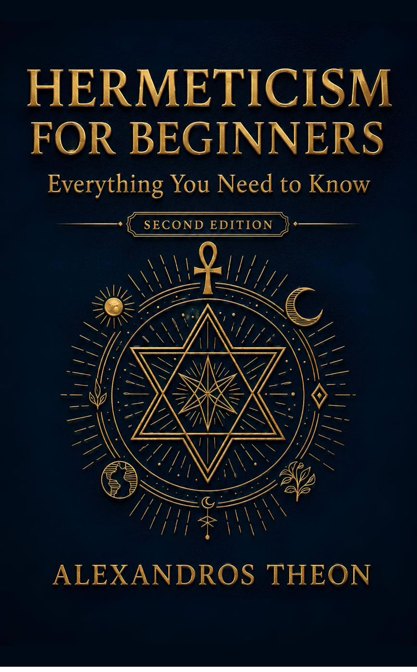
The conceptual entry point: what the tradition is and what it is not, before you put it to work.
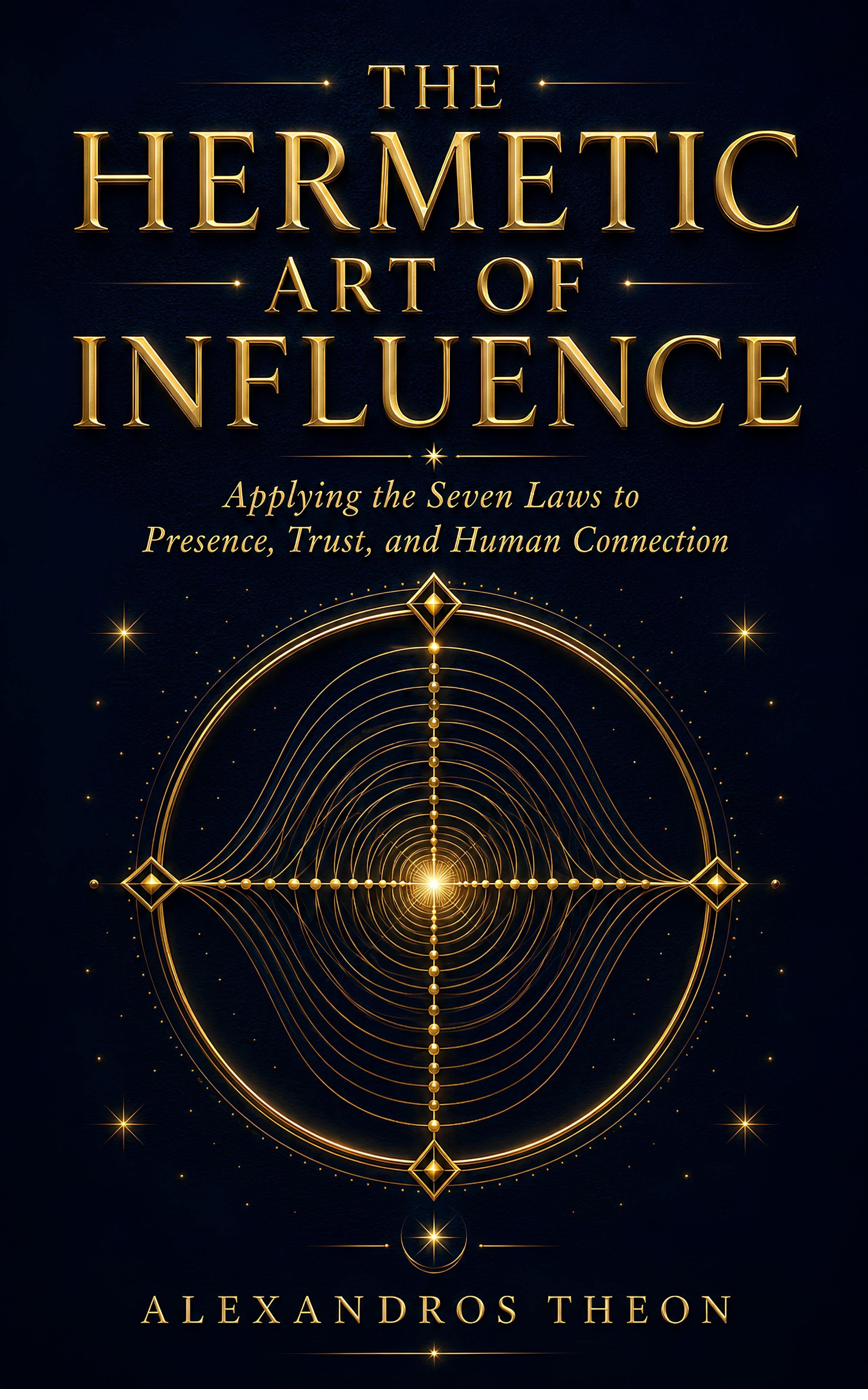
The seven laws turned toward presence, trust and human connection, without manipulation.
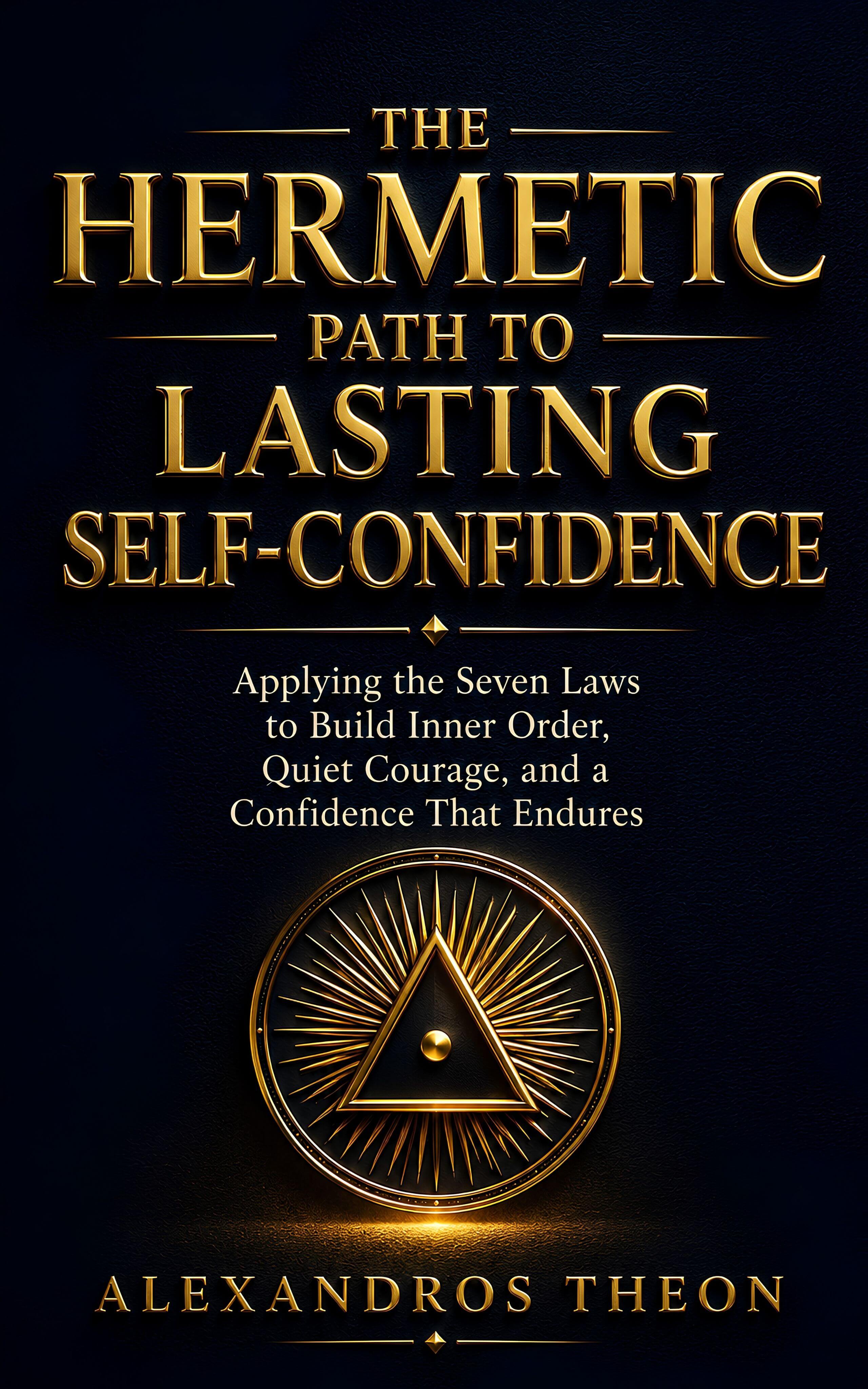
The same discipline of attention applied to inner order and a confidence that endures.
Available on Amazon
Ten chapters, seven named practices, a chapter on work and a twenty-one-day plan. Read instantly on Kindle, your phone or your computer.
Buy on Amazon · $4.90Courtesy
What the Hermetic laws are and what they are not: the honest history of the tradition, the seven lenses presented without promises, and Daniel beginning to ask a better question.
Prefer to keep it? Download the PDF.
Reader List
No spam, no empty promises. Only new books, courtesy chapters and notes from behind the library.